A Cross for Joseph Gittins
Joseph Gittins enlisted into the Royal Field Artillery on the 3rd of September 1914 at Stoke-on-Trent, He was only twenty years old.
Like so many young men of his generation, Joseph answered the call to serve. He was medically examined and declared fit for military service. He gave his occupation as railway porter, and was assigned the service number 25438, serving as a Driver with the 58th Brigade of the Royal Field Artillery.
For six months Joseph trained with the 5A Reserve Brigade in Athlone, Ireland, before moving with the 58th Brigade first to Leeds and then to Whitley. His role in the artillery would have involved working closely with horses, transporting guns, ammunition, and supplies. Army training was demanding, dangerous, and relentless.
Joseph never reached the battlefields, yet he became one of the many hidden casualties of the First World War.
In April 1915, Joseph was admitted to Netley Hospital. Only weeks later, on the 18th of May 1915, Joseph was discharged from the army after being declared permanently unfit for service. Yet even then, his military character was recorded as “very good.”
He was admitted to Cheddleton Asylum and records revealed that during army training Joseph suffered numerous falls from his horse, sustaining repeated head and chest injuries. At a time when the effects of trauma and concussion were poorly understood, these injuries appear to have had devastating consequences.
The medical diagnosis given at the time of his admission to Cheddleton Asylum was “Primary Dementia.” At the time one of the causes suggested was army training.
Behind those official records was a young man in terrible distress, and behind him stood a family desperately trying to support him.
The asylum visiting records show the devotion of those who loved him. His mother Emily, His sister Dorothy, His brother Ernest all regularly visited and In October, his uncle Charles visited him on the very same day that another tragedy struck the family — Joseph’s brother private Charles Gittins was reported missing in action.
While the family waited anxiously for news from the front, Joseph’s condition rapidly declined.
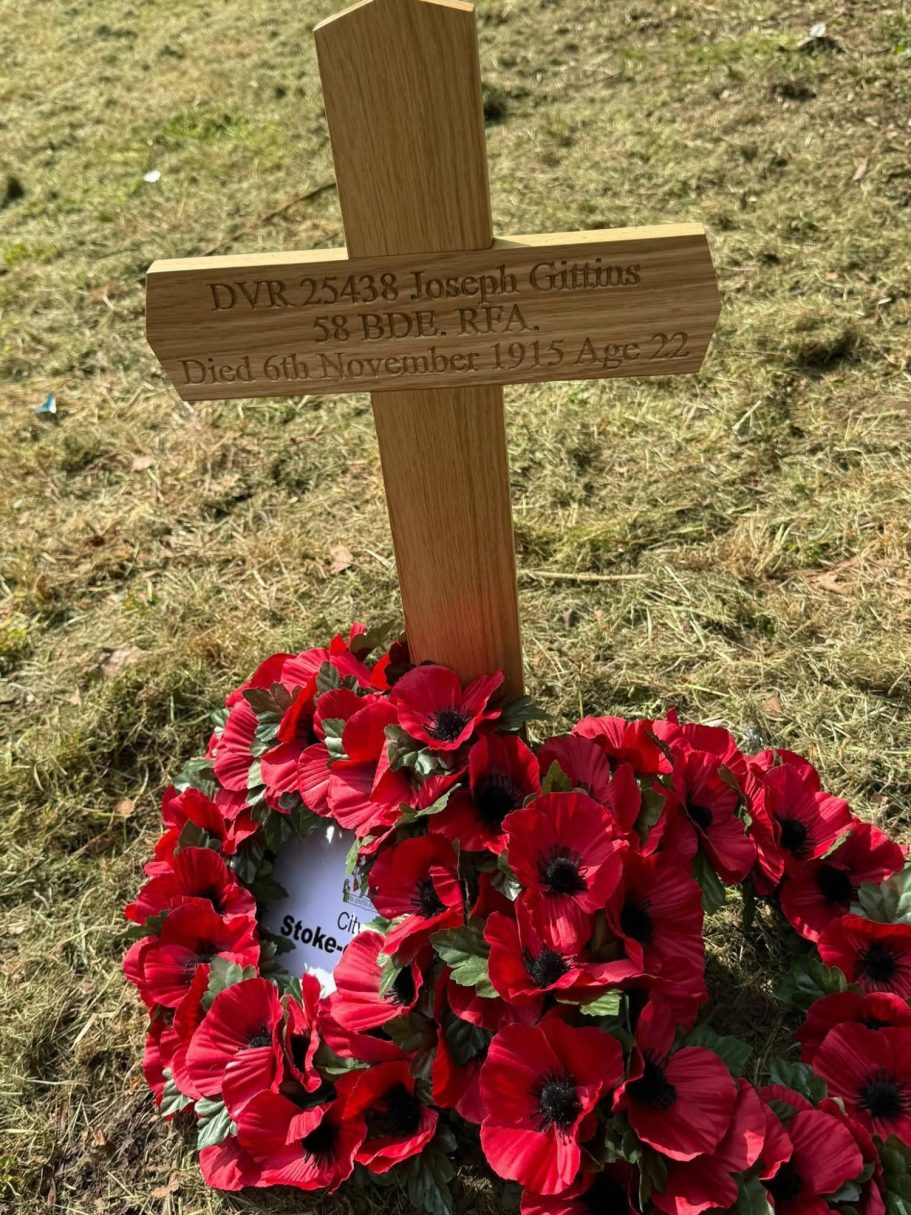
On the 6th of November 1915, Joseph Gittins died at Cheddleton Asylum from bronchopneumonia. He was twenty-two years old.
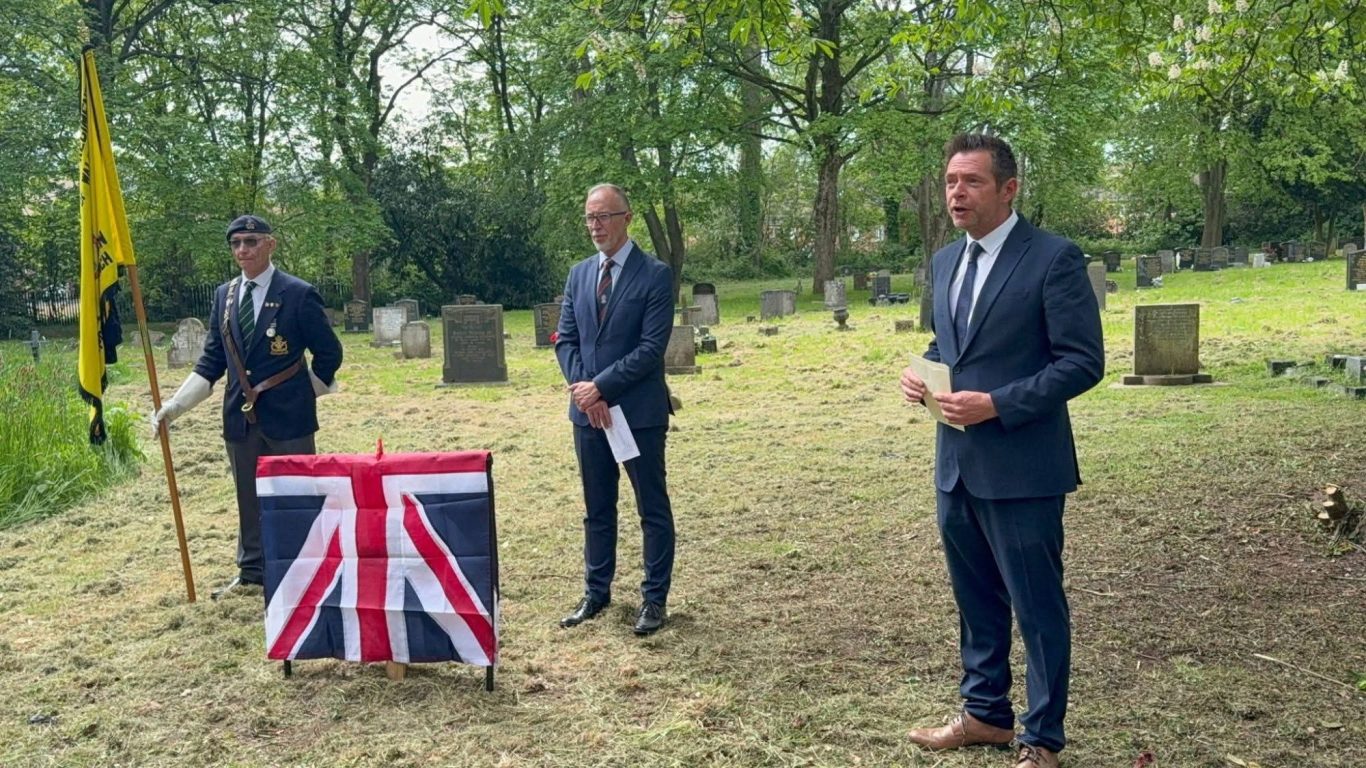
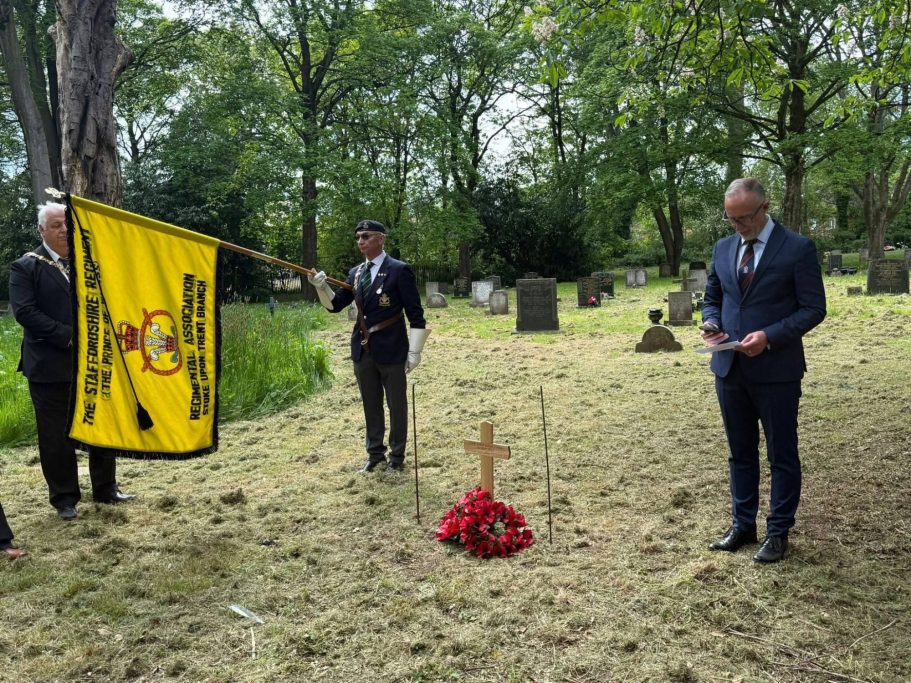
Joseph was laid to rest at Hartshill Cemetery alongside members of his family — his father Alfred, his brother Samuel and niece Olwyn Until today the grave was unmarked.
Although the Commonwealth War Graves Commission did not recognise Joseph’s death as meeting the criteria for official war grave status, his community remembered him differently. His name is commemorated on the Stoke-on-Trent Railway Station memorial and alongside his brother Charles on the memorial at St Thomas the Apostle Church in Penkhull.
Those memorials tell us something important.
They tell us that the people who knew Joseph, who lived beside him, and who mourned him, understood that he too was a casualty of war.
Though Joseph never fought overseas, his military service still cost him his health and eventually his life.
Today, more than a century later, we have the opportunity — and the responsibility — to remember Joseph Gittins not simply as a patient in an asylum or a discharged soldier, but as a soldier who answered his country’s call without hesitation, endured injury and suffering in military service, and paid the ultimate price.
His sacrifice deserves to be acknowledged.
His suffering deserves to be understood.
And his memory deserves to stand alongside all those whose lives were claimed by the Great War.
His story reminds us that remembrance must include every sacrifice, every family left grieving, and every life altered by war.
May Joseph Gittins finally receive the recognition, dignity, and remembrance he has long deserved.